
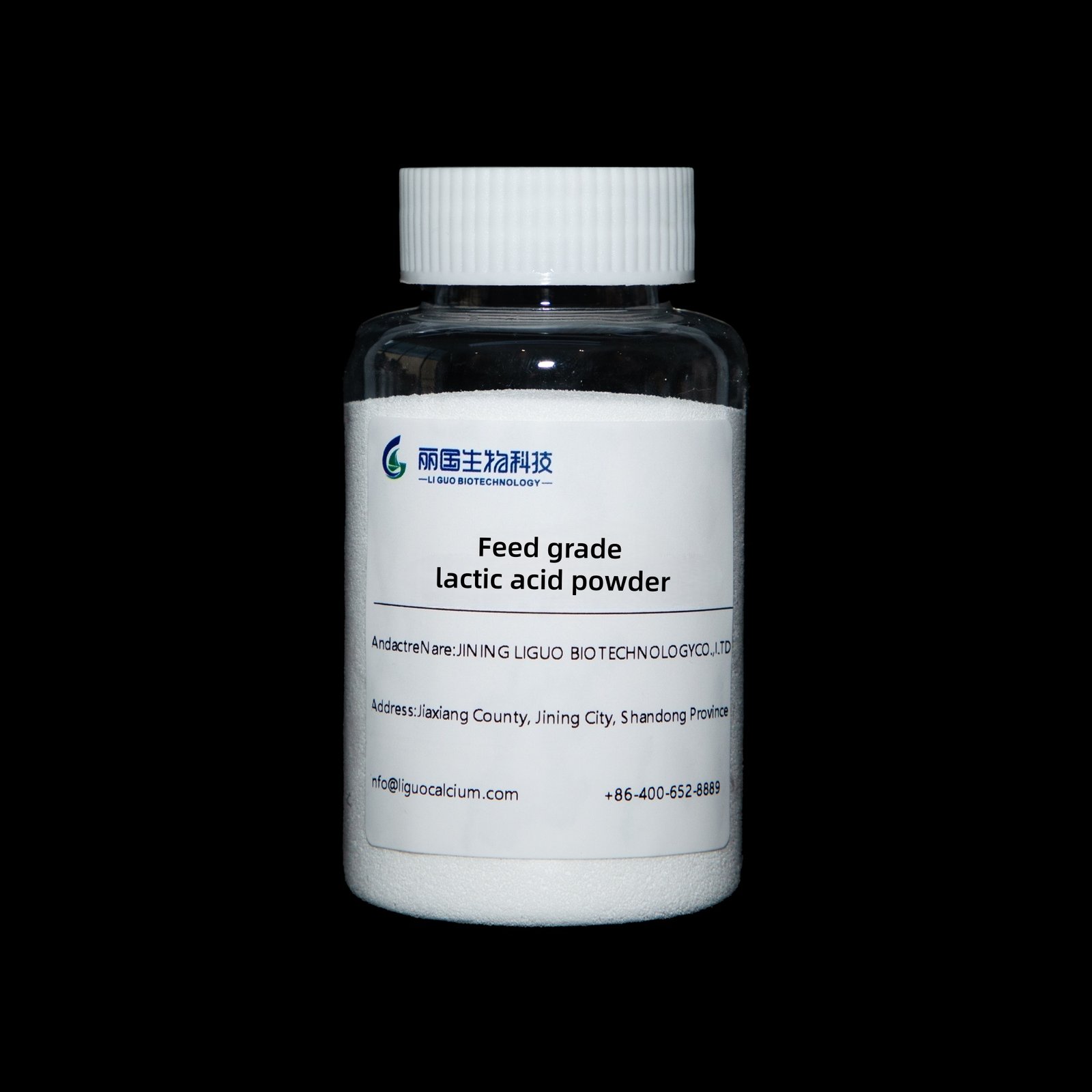
Feed Grade Lactic Acid Powder is a white free-flowing powder compound produced,It has mild, milky sour taste, easily soluble in warm water, low corrosiveness, low volatile acid odor and good mixing uniformity with all feed raw materials. It meets international feed safety standards.
Solution: Main Feed Applications & Recommended Dosage
1、Intestinal pH Regulator & Digestion Booster
Reduces pH value of stomach and small intestine, activates pepsin and digestive enzyme activity, improves absorption of protein, calcium, phosphorus and trace minerals, lowers feed conversion ratio (FCR) and boosts daily weight gain.
2、Broad-Spectrum Intestinal Bacteriostat (Antibiotic Substitute)
Suppresses reproduction of harmful pathogens such as E. coli, Salmonella and Clostridium; promotes proliferation of lactic acid probiotics; effectively cuts diarrhea rate of weaned piglets, chicks and young ruminants, enhances animal immunity.
3、Palatability Improver & Flavor Enhancer
Natural milky sour taste raises feed intake of young animals; masks off-flavors from raw materials like fish meal and soybean meal.
4、Feed Preservative
Lowers feed pH to inhibit mold and spoilage bacteria, extends shelf life of premix, pellet feed and wet feed without toxic residues.
5、Nutrient Fortification
Calcium lactate component supplements dietary calcium simultaneously during acidification, supporting bone development of livestock and poultry.
Main Application Scope
Swine: Weaned piglets, growing-finishing pigs, sows
Poultry: Broilers, laying hens, ducklings, turkey
Ruminants: Fattening cattle, sheep, lambs (post-ruminant)
Aquaculture: Fish, shrimp feed
Pet feed & young animal milk replacers
Recommended Dosage
Dosage below refers to complete feed weight (whole finished feed), based on commercial feed grade lactic acid powder (50–55% lactic acid content). Max safe limits comply with EFSA FEEDAP regulations.
1) Swine (Most Widely Used)
-Weaned piglets (2–8 weeks): 8–12 kg per ton of full feed (0.8%–1.2%)
-Effect: Reduce diarrhea by over 30%, improve weight gain and feed efficiency
-Growing & finishing pigs: 3–6 kg/ton feed (0.3%–0.6%)
-Sows (gestation & lactation): 4–7 kg/ton feed
-Upper safety limit for pigs: 50 kg pure lactic acid per ton feed (equivalent to ~100 kg lactic acid -powder/ton feed)
-Drinking water additive for pigs: 10–15 g powder per liter drinking water
2) Poultry (Broilers, Layers, Ducklings)
-Broiler chicks (0–21d): 5–8 kg/ton feed (0.5%–0.8%)
-Grower & laying poultry: 2–4 kg/ton feed (0.2%–0.4%)
-Upper safety limit for poultry: 20 kg pure lactic acid per ton feed (~40 kg powder/ton feed)
3) Ruminants (Cattle, Sheep, Post-weaning Lambs)
-Fattening cattle & sheep: 3–7 kg/ton complete feed
-Max safe limit: 50 kg pure lactic acid/ton feed
-Not recommended for pre-ruminant calves with underdeveloped rumen.
4) Aquatic Feed (Fish, Shrimp, Crab)
-Fry & juvenile aquatic animals: 4–7 kg/ton feed
-Adult aquatic feed: 2–5 kg/ton feed
5) Milk Replacer & Pet Feed
-Piglet/calf milk replacer: 10–15 kg/ton formula
-Dog & cat feed: 2–5 kg/ton feed
Usage Precautions
Mix evenly with premix first before blending into full feed to avoid local over-acidification.
Seal and store in cool, dry warehouse to prevent moisture absorption and caking.
Do not exceed maximum safe dosage; excessive addition may cause over-low intestinal pH, reduce feed intake and interfere mineral absorption.
Can be combined with short-chain organic acids (formic acid, citric acid) or probiotics for synergistic anti-diarrhea effect.
Operators shall wear dust masks and goggles to avoid eye and respiratory irritation from powder dust.