
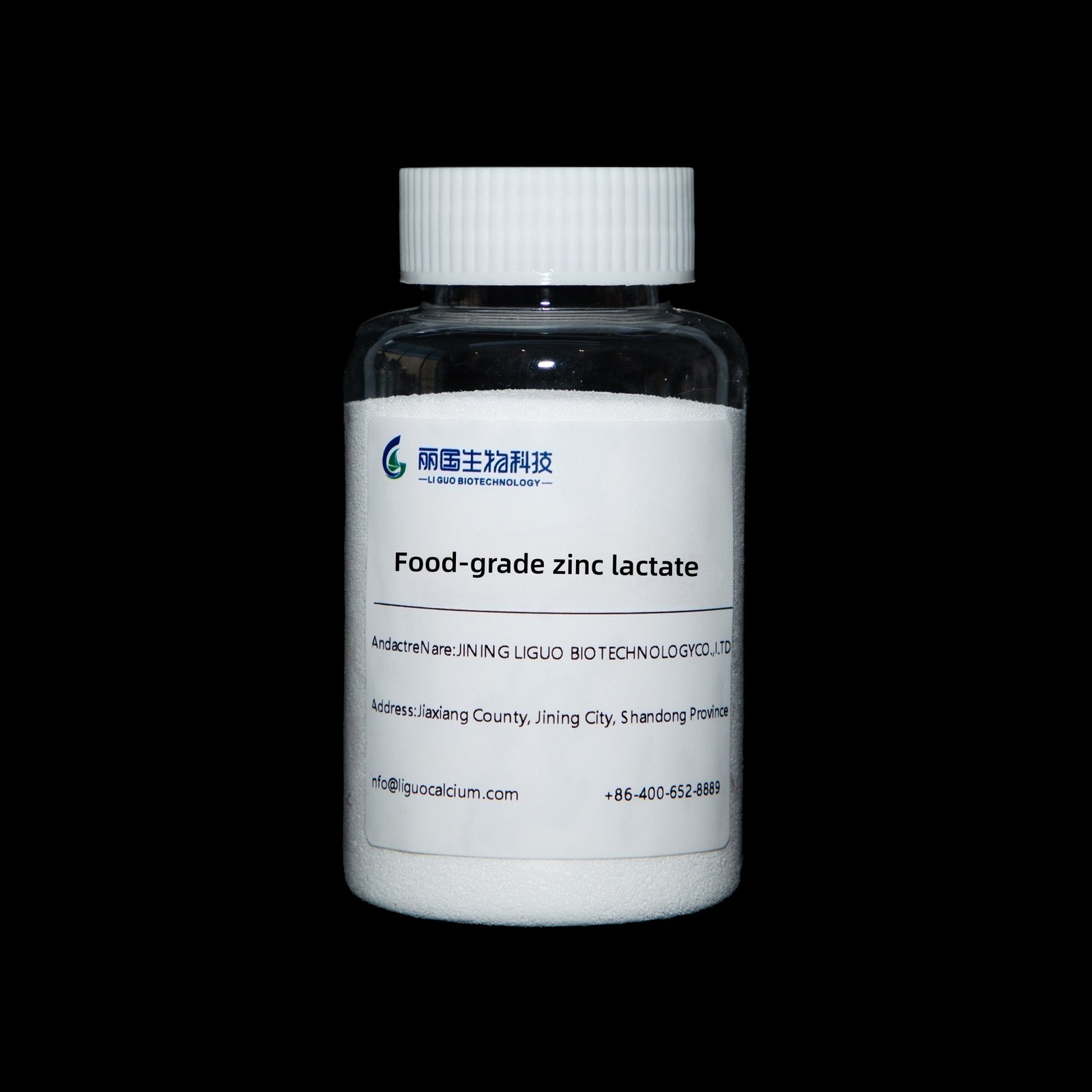
Food-grade zinc lactate, is a high-purity organic zinc salt produced under strict food safety standards. It appears as white crystalline powder or granular crystals, easily soluble in water, slightly soluble in ethanol, and free of peculiar odor. Unlike inorganic zinc sources such as zinc sulfate, it boasts mild taste, low irritation to the gastrointestinal tract and high human absorption efficiency, making it a premium zinc fortificant widely applied in the food and beverage industry.
Solution: Main Food Applications & Recommended Dosage
Core Functional Properties
1. High Bioavailability
The lactate group enables zinc to be absorbed via active transport in the intestinal tract. Its absorption rate far exceeds inorganic zinc salts, effectively supplementing human zinc intake to maintain immune function, promote growth and development, and protect skin and mucosal health.
2. Excellent Food Compatibility
It has weak acidity and does not cause drastic pH fluctuations in food systems. It will not produce bitter or metallic aftertastes, and shows stable compatibility with proteins, vitamins and other nutritional ingredients without triggering precipitation or discoloration.
3. Stable Processing Performance
It maintains stable chemical properties during high-temperature sterilization, baking, extrusion and other food processing procedures, with no decomposition or loss of zinc activity, suitable for diverse thermal processing food production lines.
Main Application Fields
– Fortified Beverages & Dairy Products: Milk powder, yogurt, fruit juice, functional sports drinks and infant formula milk powder for zinc nutrition enhancement.
– Baked & Puffed Foods**: Bread, biscuits, cereal bars, instant oatmeal and puffed snacks to boost trace element nutrition.
– Health Food & Dietary Supplements: Capsules, tablets, oral liquids and nutrient premixes targeting zinc-deficient crowds including children, adolescents, pregnant women and the elderly.
– Confectionery & Convenience Foods: Candy, chewing gum, instant porridge and seasonings as a mild mineral additive.
Food Safety Specifications
Compliant with international food additive standards including FCC (Food Chemicals Codex), E number E657, and national food grade heavy metal limits. Strictly controlled contents of lead, arsenic, cadmium and mercury; no residual harmful solvents or heavy metal impurities. It only contains edible lactic acid and zinc ions, posing no toxic side effects within the recommended daily dosage.
Recommended Dosage
1. Conversion Basis
Zinc lactate contains about 22% elemental zinc. When calculating dosage, distinguish between total zinc lactate and pure zinc element.
2. Daily Nutritional Supplement Dosage (Human Oral Intake)
Daily elemental zinc requirement (general international standard)
Infants (0–1 year): 2–3 mg elemental zinc
Children (1–10 years): 5–10 mg elemental zinc
Teenagers & Adults: 10–15 mg elemental zinc
Pregnant & lactating women: 12–20 mg elemental zinc
Corresponding zinc lactate dosage
Calculate formula:
Zinc lactate mass = Elemental zinc ÷ 0.22
Adult daily supplement: 45.45–68.18 mg zinc lactate (provides 10–15 mg Zn)
Pregnant/lactating: up to 90.91 mg zinc lactate daily
3. Fortification Dosage in Food & Beverages
(Based on finished product weight, compliant with FCC / E657 regulations)
-Infant formula milk powder
Add 30–100 mg zinc lactate per kg finished powder
-Dairy, yogurt, fruit juice, functional drinks
20–80 mg/kg liquid product
-Biscuits, cereals, baked food, puffed snacks
30–120 mg/kg finished food
-Tablets, capsules, oral liquid health supplements
-Per single serving: 45–90 mg zinc lactate (10–20 mg elemental zinc per dose)
4. Usage Restrictions & Warnings
-Do not exceed the maximum daily tolerable intake:
Adults upper limit: 40 mg elemental zinc daily (≈181.82 mg zinc lactate)
Excess intake may cause nausea, digestive discomfort, interfere with copper absorption.
-For food production, strictly follow local food additive national standards (FDA, EU E657, GB standards).
-Long-term high-dose supplementation is not recommended without professional medical guidance.
Short Version for Product Specification Sheet
Food-grade zinc lactate is used as zinc nutrition fortifier. Its elemental zinc content is 22%.
Food fortification: 20–120 mg per kilogram of finished food.
Daily oral supplement for adults: 45–68 mg zinc lactate (10–15 mg elemental zinc); max daily safe dosage ≤182 mg zinc lactate.